Some of the biggest property management headaches start with things you would hardly notice.
A damaged key. A small leak underneath a sink. A car parked in the wrong space.
None of these sounds particularly serious on its own. But leave the problem for long enough, or fail to deal with it properly, and the consequences can be much bigger than you expected.
At Castle Properties, we see how different this can look across serviced accommodation, HMOs and commercial property. The properties and the people using them may be different, but one thing remains the same: small property maintenance problems can quickly become much bigger when they go unnoticed or aren’t dealt with promptly.
Here are three real examples that show exactly what we mean.
Imagine checking out of your accommodation, only to discover that you can’t get out of the property.
That is exactly what happened to a family staying in one of our serviced accommodation properties.
A small piece of the key had chipped when the guests locked the door the previous evening. It was a seemingly minor bit of damage, but it meant the family couldn’t get out.
Suddenly, something as simple as a damaged key had become an urgent situation.
The guests needed help, and they needed it quickly.
Fortunately, we were on hand and managed to resolve the problem straight away.
It is a good example of why managing serviced accommodation involves much more than preparing a property for guests and making sure the booking runs smoothly.
Things can go wrong at any time. When they do, how quickly you respond can make a real difference to the guest’s experience.
A small maintenance problem might not cost much to put right, but the inconvenience it causes can be significant if nobody is available to deal with it.
And when guests are unable to leave a property, it is not something you can simply add to tomorrow’s to-do list.
Now, let’s look at a completely different situation.
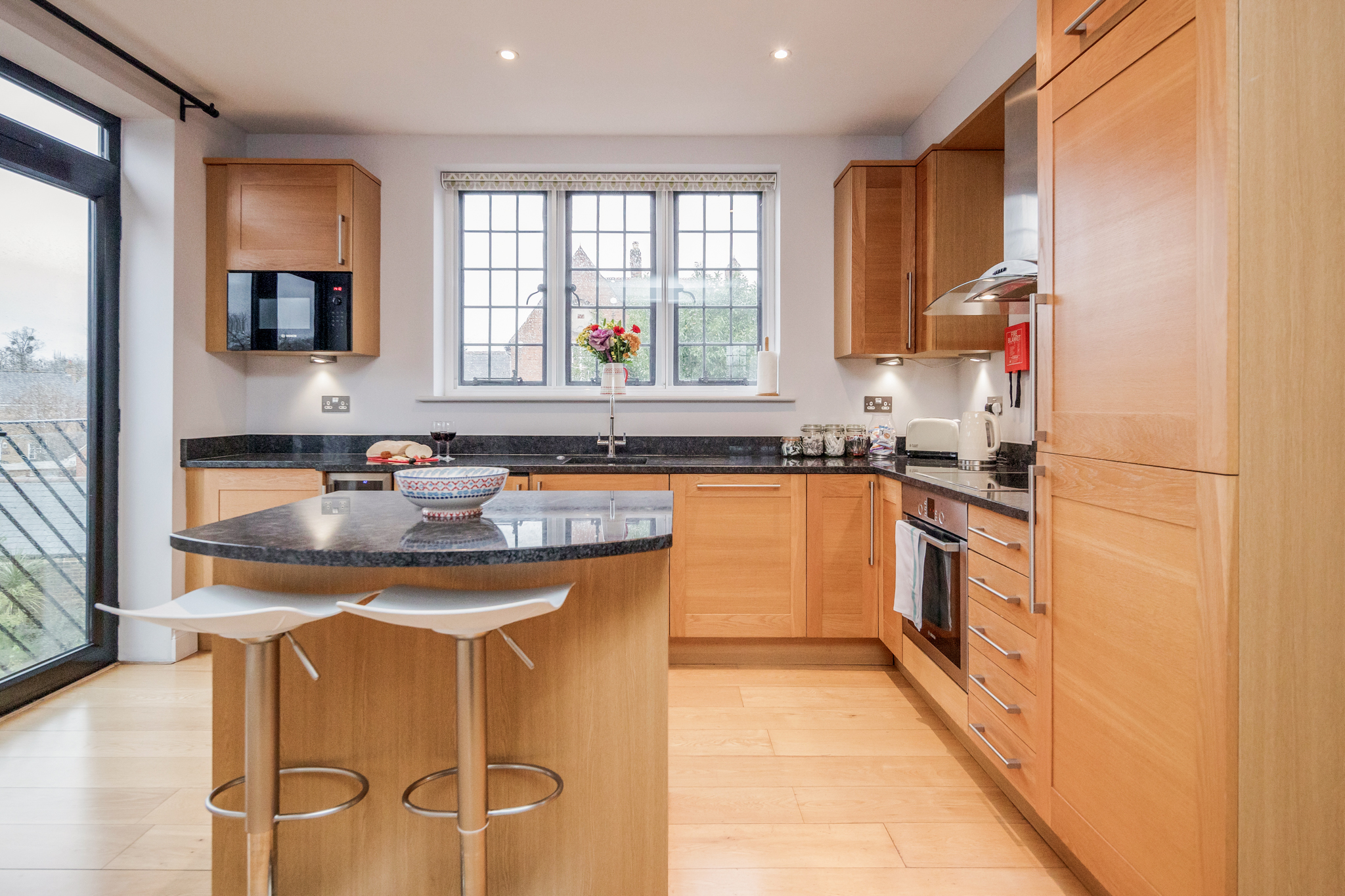
In one of our HMOs, we discovered a small leak underneath the kitchen sink. Unfortunately, it had gone unnoticed for quite some time.
By the time the problem was identified, the damage had spread beyond the original leak. The flooring and some of the kitchen units had deteriorated so badly that we were looking at replacing the entire kitchen.
To be fair, the kitchen probably needed replacing anyway. But it still illustrates an important point about property maintenance.
The leak was small. The damage wasn’t.
Water can cause significant deterioration when it continues to escape unnoticed. What might initially have been a relatively straightforward repair can turn into a much larger job involving damaged flooring, kitchen units and additional disruption for the people living in the property.
This is particularly important in shared houses, where maintenance checks and clear reporting arrangements matter.
Tenants may notice something unusual without realising how serious it could become. Equally, a small leak underneath a sink isn’t always immediately obvious.
That is why it helps to have regular checks and make it easy for tenants to report problems as soon as they notice them.
You cannot prevent every leak, but you can improve the chances of catching one before it causes extensive damage.
The third example comes from a commercial automotive site where several businesses operate alongside one another, each with their own parking spaces.
You might not immediately think of parking as a property management problem. After all, what is the harm in somebody leaving a car in the wrong space?
The difficulty starts when it keeps happening.
Customers were repeatedly leaving vehicles in spaces used by neighbouring businesses. As you can imagine, this caused frustration.
One business was inconvenienced by something that another business’s customers were doing. When the situation continued, that frustration began to build, eventually developing into a much bigger disagreement between the tenants.
Yet the original problem was relatively simple.
Clearer communication between the businesses, better management of customer parking and a conversation about how the shared site should operate could have helped address the situation before it escalated.
This is where commercial property management requires a slightly different approach.
It is not always about repairing something that is broken. Sometimes, it is about managing how people use a space, understanding the relationships between tenants and resolving everyday disagreements before they affect the wider operation of the property.
A parking problem might sound minor, but when several businesses depend on the same site, it can have a knock-on effect on their working relationships.
These examples come from three different property strategies, and the problems themselves have very little in common.
One involved a guest who couldn’t leave their accommodation. Another involved water damage in a shared house. The third concerned parking arrangements between commercial tenants.
But there is a common thread.
In each case, something relatively small had the potential to become a much bigger problem.
That is why good property management is not just about dealing with major repairs or responding when something goes seriously wrong.
It is also about paying attention to the everyday details.
Sometimes that means checking that something is working properly. Sometimes it means listening when a tenant raises a concern. And sometimes it means recognising that a disagreement needs to be addressed before it gets out of hand.
Not every problem can be predicted, and not every repair can be completed immediately. But recognising what needs attention and responding appropriately can make a real difference.
For property owners, the lesson is not that every minor fault needs to become a major concern.
It is that small problems deserve attention before you know how serious they might become.
A few practical habits can help:
None of this guarantees that a property will never have problems. That is simply part of owning and operating buildings.
What matters is how those problems are identified, prioritised and managed.
It is easy to focus on the bigger decisions involved in owning a property: choosing the right investment strategy, setting rental prices or deciding how to use a building.
Those decisions matter. But the day-to-day details matter too.
A damaged key, a leaking pipe or a parking disagreement might not seem significant at first. Yet each can affect guests, tenants, property condition or the relationships between the people using a building.
At Castle Properties, our work covers serviced accommodation, HMOs and commercial property, and each comes with its own responsibilities. There is no single approach that works for every situation.
Sometimes you need to prevent a problem. Sometimes you need to resolve it quickly. And sometimes you need to have a conversation before a small disagreement turns into something much harder to manage.
You cannot prevent every problem, but you can make a difference by noticing the little things and dealing with them properly.
That is often what good property management comes down to.
Whether you own a serviced accommodation property, an HMO or a commercial building, having the right management approach can help you deal with day-to-day challenges and keep smaller problems from escalating.
If you would like to discuss your property and the support you need, get in touch with Castle Properties.